History · English

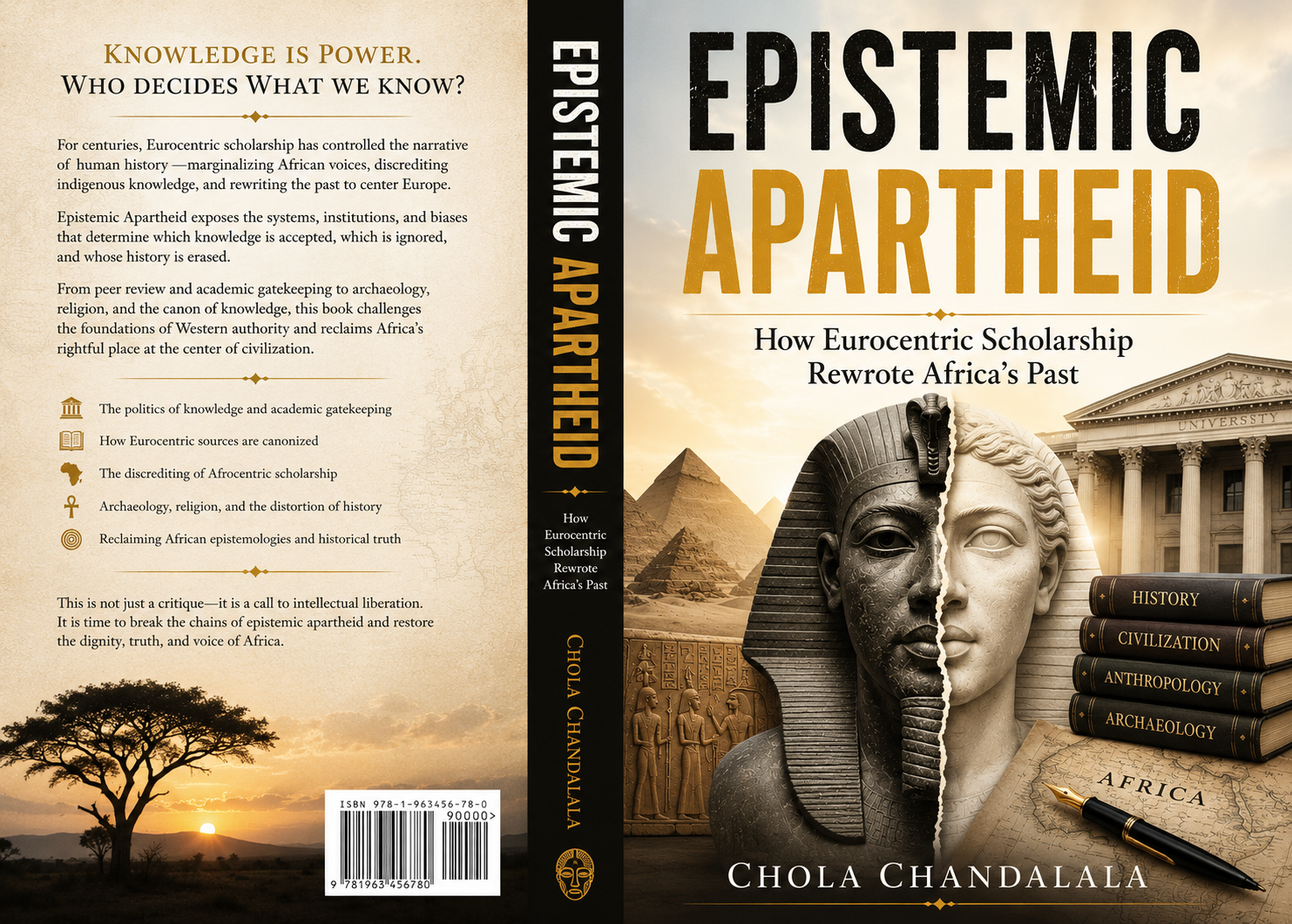
Cover image for EPISTEMIC APARTHEID: How Eurocentric Scholarship Rewrote Africa's Past

EPISTEMIC APARTHEID: How Eurocentric Scholarship Rewrote Africa's Past

By Chola Chandalala

Who decides what counts as history? Who decides whose knowledge is credible? And why has Africa so often been excluded from the story of civilization? For centuries, the achievements, philosophies, and intellectual traditions of Africa have been filtered through Eurocentric frameworks that often privileged European interpretations while dismissing African voices. In Epistemic Apartheid, Chola Chandalala argues that this pattern is not merely accidental—it reflects a long-standing imbalance in how knowledge has been produced, evaluated, and institutionalized. Drawing on history, archaeology, biblical studies, anthropology, Egyptology, philosophy, and postcolonial scholarship, this provocative work examines how academic authority has shaped public understanding of Africa's past. It explores the standards by which evidence is accepted or rejected, the politics of peer review, the treatment of oral traditions, and the enduring influence of colonial assumptions within historical scholarship. Rather than asking readers to accept Afrocentric claims uncritically, the book challenges them to ask a more fundamental question: Are all historical claims evaluated by the same standards of evidence? Inside, you'll discover: • Why some historical narratives become "accepted truth" while others remain marginalized. • How colonial-era assumptions continue to influence modern scholarship. • The debates surrounding Ancient Egypt, African civilizations, and the origins of knowledge. • The role of archaeology, linguistics, oral traditions, and classical sources in reconstructing African history. • How influential scholars—including Cheikh Anta Diop, Théophile Obenga, Martin Bernal, Ivan Van Sertima, and others—challenged established academic orthodoxies. • Why the struggle over Africa's past remains central to global conversations about identity, education, and intellectual justice. Bold yet carefully documented, Epistemic Apartheid does not merely revisit familiar debates—it invites readers to reconsider how history itself is written, who has the authority to write it, and what is at stake when entire civilizations are denied equal standing in humanity's shared story. Whether you are a student, educator, historian, researcher, or simply a curious reader interested in African history, decolonization, and the politics of knowledge, this book offers a thought-provoking exploration of one of the most important intellectual debates of our time.
  • history

Sign in to buy or read the full book and keep it in your personal library.

Free book sample

Chapter 1

Epistemic Apartheid How Eurocentric Scholarship Rewrote Africa’s Past: When Truth Wears Chains, History Becomes Propaganda Second Edition Chola Chandalala © 2026 Chola Chandalala All rights reserved. No part of this publication may be reproduced, stored in a retrieval system, or transmitted in any form or by any means—electronic, mechanical, photocopying, recording, or otherwise—without the prior written permission of the author, except for brief quotations used in critical reviews or scholarly works. Epistemic Apartheid: How Eurocentric Scholarship Rewrote Africa’s Past First Edition For permissions, inquiries, or speaking engagements, contact: Email., cmuzo91@gmail.com This book is a work of original research, critique, and historical analysis. While every effort has been made to ensure accuracy, the author welcomes respectful dialogue and ongoing inquiry. DEDICATION To those who carry the genius of Africa in their blood but have been taught to doubt it— To the children of the continent and its diaspora, who were told their past was a void and their minds were made to follow, not to lead— To the seekers, the questioners, the builders of new paradigms— And to every soul still healing from the lie that Africa gave nothing to the world— This book is for you. May you remember who you are, and who we have always been. Acknowledgments This book is the product of not only research and reflection, but of a long and collective struggle to reclaim African dignity, truth, and epistemic sovereignty. Epistemic Apartheid could not have been written without the intellectual courage of those who came before me—scholars who dared to speak against the dominant narratives, even when it cost them their careers, reputations, or safety. I stand on the shoulders of giants. To Cheikh Anta Diop, Chancellor Williams, Theophile Obenga, Marimba Ani, J. A. Rogers, George G. M. James, John Henrik Clarke, Yosef Ben Jochannan, Ivan Van Sertima. Ng?g? wa Thiong'o, Molefi Kete Asante, Chinua Achebe, Anthony T. Browder, and many more, thank you for lighting the path with scholarship rooted not in imitation, but in liberation. Your work was not only academic—it was insurgent, spiritual, and necessary. To those unsung African elders, griots, teachers, and spiritual custodians who preserved our memory through oral tradition when the written word was used to erase us—this book honors yo…

Continue the free sample

Explore more stories

Explore more
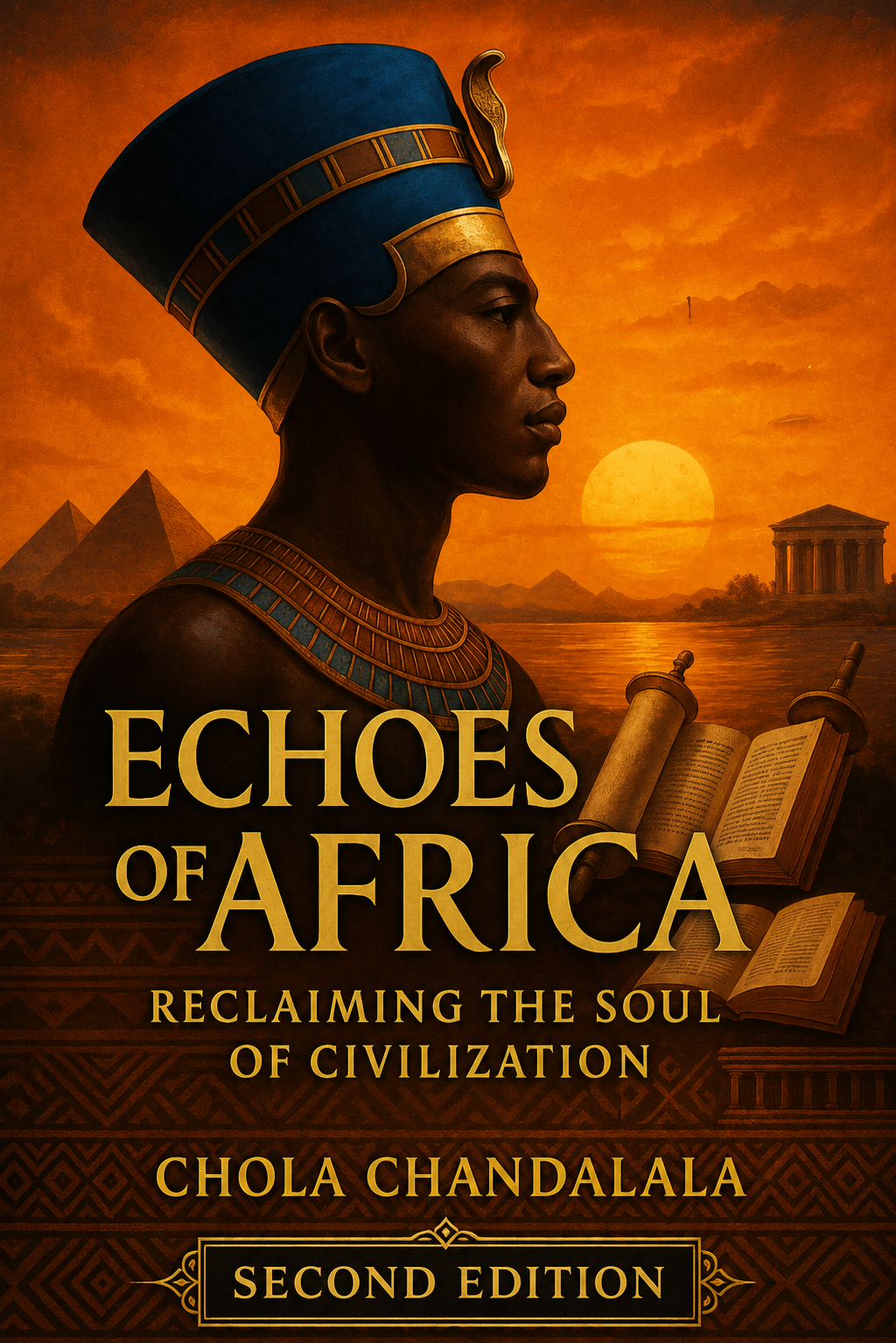
Cover image for ECHOES OF AFRICA: Reclaiming the Soul of CivilizationHistory

ECHOES OF AFRICA: Reclaiming the Soul of Civilization

Alex Chandalala

What if Africa wasn't on the margins of history—but at its very center? For centuries, the story of civilization has largely been told through a Eurocentric lens, often portraying Africa as a passive observer rather than an active architect of humanity's greatest achievements. But what if that story is incomplete? In Echoes of Africa, theologian, philosopher, and historian Chola Chandalala presents a bold and meticulously researched re-examination of Africa's place in world history. Drawing on archaeology, anthropology, biblical studies, classical literature, linguistics, genetics, and the work of leading scholars from around the world, he challenges long-held assumptions about the origins of civilization, religion, and human knowledge. From the rise of ancient Egypt and Nubia to the intellectual traditions of Timbuktu; from the African context of the Hebrews and the early development of Judaism to the role of Africa in the world of Jesus and the birth of Christianity, this book explores evidence that has too often been overlooked, marginalized, or interpreted through colonial-era frameworks. Rather than replacing one historical orthodoxy with another, Echoes of Africa invites readers to examine the evidence with fresh eyes and consistent scholarly standards. It asks difficult questions about history, identity, academic authority, and the stories we inherit—and challenges us to reconsider Africa's enduring contribution to the human story. Provocative, deeply researched, and accessible to both general readers and scholars, Echoes of Africa is an invitation to rethink the past—and, in doing so, better understand our shared human heritage.

English · Book

Explore this release

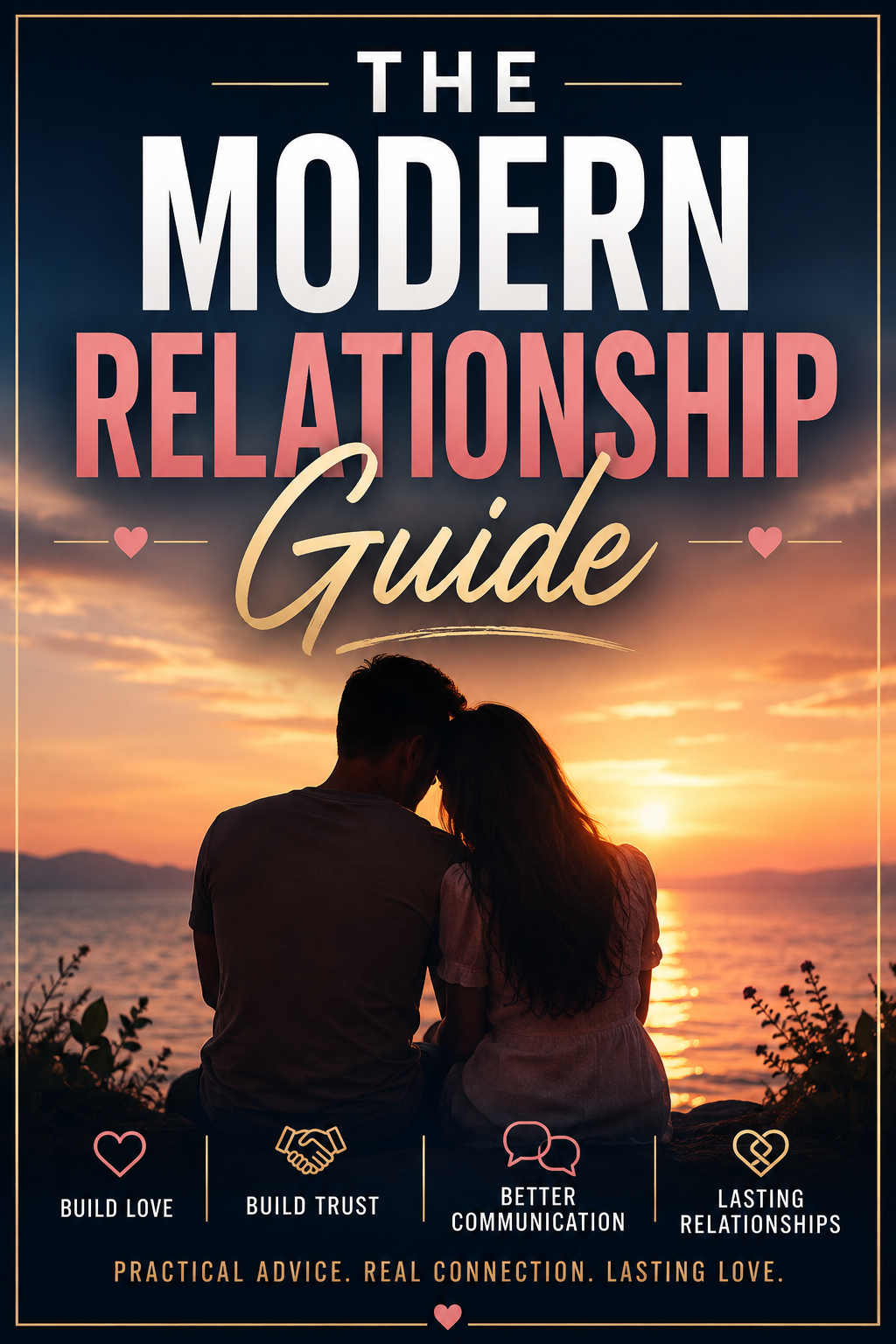
Cover image for The Modern Relationship GuideRomance

The Modern Relationship Guide

Joseph Donkoh

INTRODUCTION Understanding Healthy Relationships Love is one of the most powerful experiences in human life. It can bring happiness, companionship, emotional support and a sense of belonging. But love alone does not automatically create a healthy or lasting relationship. Many people fall in love but struggle to maintain the relationship. Why? Because a successful relationship requires more than attraction. It requires communication, trust, respect, emotional maturity, honesty, patience, understanding and consistent effort. Whether you are single and looking for the right person or already in a relationship, understanding how healthy relationships work can help you make better decisions. A relationship should not constantly leave you confused, afraid, ignored or emotionally exhausted. A healthy relationship should provide a safe environment where two people can be themselves, communicate openly, support each other and grow together. This does not mean healthy couples never disagree. They do. They have misunderstandings. They get angry. They sometimes disappoint one another. The difference is that healthy couples learn how to handle problems without destroying the relationship. This book is designed to give you practical principles that you can apply to your own love life. You will learn how to: Understand yourself before choosing a partner Recognize qualities that matter in a partner Build genuine love Develop trust Communicate effectively Handle disagreements Deal with jealousy and insecurity Establish healthy boundaries Strengthen emotional intimacy Avoid common relationship mistakes Keep love alive over time Recognize unhealthy relationship patterns Build a relationship based on mutual respect Remember: A good relationship is built, not simply found.

English · Book

Explore this release

Cover image for Break Free From DiabetesSelf-Help

Break Free From Diabetes

E. M. Ebenezer

You've been told to avoid the foods you grew up eating. You've read diet plans built around ingredients you can't find at your local market. You've felt like managing diabetes means giving up your culture, your kitchen, and your peace of mind. It doesn't. Break Free From Diabetes is a practical, honest guide to managing your blood sugar using the foods, habits, and everyday realities of life in Nigeria and across Africa. No imported superfoods. No expensive gym memberships. No guilt. Inside, you'll find: How diabetes actually works in your body, explained in plain language Which African foods help lower blood sugar — beans, ugu, okra, unripe plantain, and more A full 14-day meal plan and simple, affordable recipes you can start cooking tonight How to manage this condition on a real-world budget, without skipping medication or care Practical tools for movement, sleep, stress, and family meals that actually fit your life Straight talk on working with your doctor, understanding your numbers, and reading food labels Real, relatable stories of people navigating this same journey Your diabetes doesn't have to run your life. Let's break free.

English · Book

Explore this release